For owners in Corpus Christi
Business CPA Corpus Christi AlternativeThe return built from months already closed
The return is a filing when the months already match the bank. It is a reconstruction when they do not.
Name the year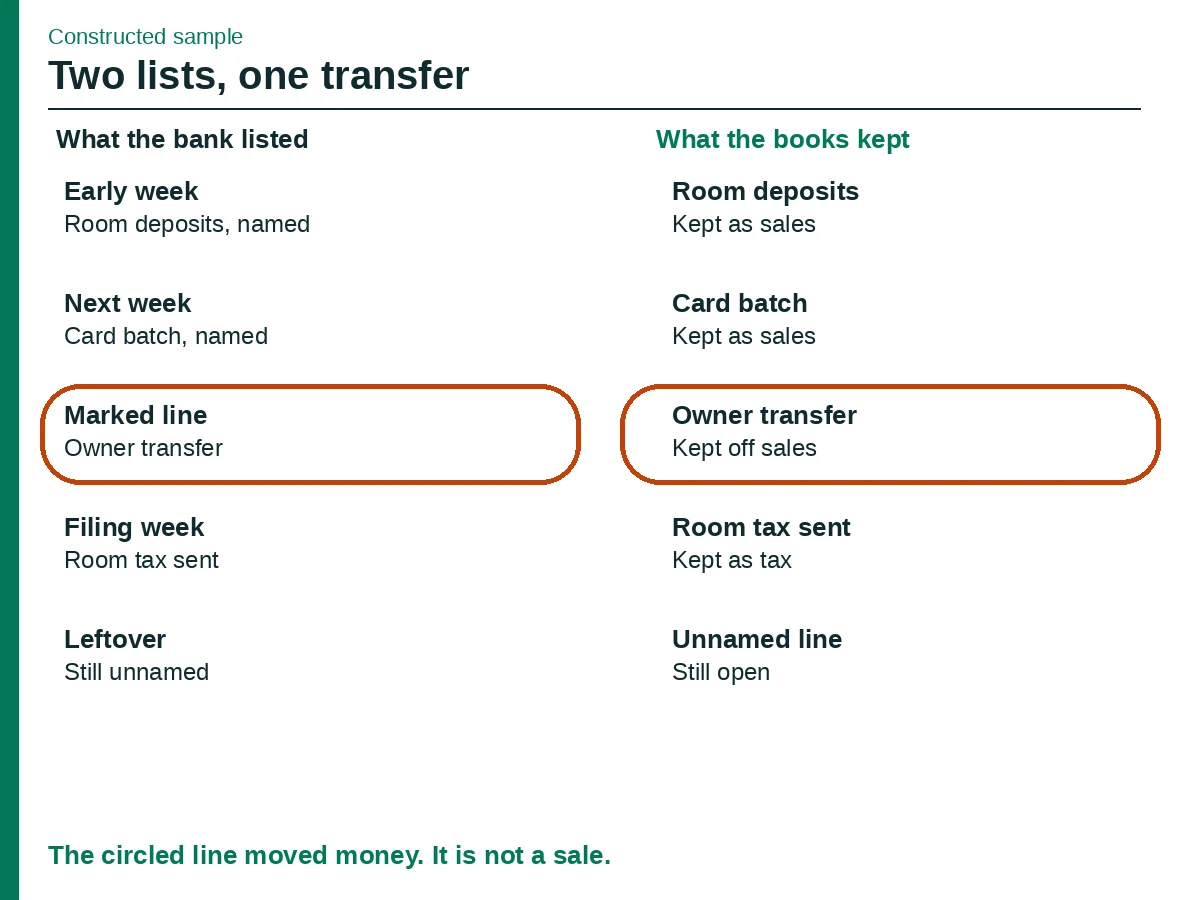
For owners in Corpus Christi
The return is a filing when the months already match the bank. It is a reconstruction when they do not.
Name the yearThe first Friday at the Art Museum of South Texas is a night people in town keep on purpose. A return should feel that planned. It lands because the months were already closed, not because the calendar suddenly got serious in the spring. We do not claim a Friday in that gallery. We claim the habit of a date that was on the wall all year.
Estimates are the part owners feel only when they are missing. If nothing was sent during the year, April is the first time the balance shows up, and it shows up with a penalty beside it. Last year's bill and this year's pace sit side by side, and that comparison is how we decide whether a quarterly payment still belongs on your calendar. A penalty letter gets the records it names. Relief is not promised on a public page.
Owner draws, a transfer between two accounts of the same business, and a loan coming into the operating account are not sales. Left inside income, they make the year look louder than it was, and the return repeats the noise. Naming them is part of the close, which means it is part of the return. If the months were messy, the return has to stay messy in the same places. We do not tidy the story in April.
A lender may see that package after your month lines up with the statement. Bringing the package to the first conversation does not make an open month finished. Statements without a signed opinion are work we do. An audit signature, a review, and a compilation sit outside this practice. Those go to a firm that can sign them, and the first conversation says so.
The May franchise report sits on the same calendar as the federal return and it is not a substitute for it. A zero on that report does not always cross the report off the list. We keep the May date next to the monthly close so nobody meets it for the first time the week it is due.
Ship a sale past the county line and the local piece of sales tax can change even though the register never moved. We do not guess that row from a customer's area code. Where the sale happened has to be in the books already. The return can only repeat a place the invoice already named.
Bring the last close, the question, and the year you are worried about. If the books have never been closed, say that on the first call. An honest gap is a better start than a month that only looks finished.
The return is a retelling. It can repeat a month your statement already supports, and it should not improve the story on the way through. Owner draws, a transfer between two accounts of the same business, and a loan into the operating account are not sales. Left inside income, they make the year louder than it was. We name them in the close so April does not have to discover them.
Estimates are the part people feel when they are missing. If nothing went out during the year, April is the first time the balance appears, and a penalty can sit beside it. We compare the prior bill with the pace of the closed months and say whether another quarterly payment still belongs on the calendar. A penalty letter gets the records it names. A public page does not promise relief.
A lender may see that package after the month lines up with your statement. Bringing the package to the first conversation does not finish an open month. Statements without a signed opinion are work we do. An audit signature, a review, and a compilation sit outside this practice. The first conversation says so, before anyone spends a month hoping for a signature we do not give.
Sales that ship past the county line can change the local piece of sales tax even though the register never moved. We do not guess that row from an area code. The invoice should already say where the goods went. The return repeats that place. It does not invent one on the night the file is assembled.
The May franchise report sits on the same calendar and it is not a stand-in for the federal return. A zero on that Texas report does not always cross it off the list. We keep the May date next to the monthly close so the week the report comes due does not catch you cold. Bring the last close, the question, and the year you are worried about.
A year can look strong on a statement and still be a transfer between two accounts the same owner already holds. We want that named in the close, because April is a poor month to meet it for the first time. Estimates that left on time turn the spring balance into a remainder. Estimates that never left turn April into the whole conversation, and a penalty can sit beside the balance. We gather the months the letter names. We do not print a public promise that the penalty gets smaller because the call felt calm.
If a sale left Nueces County, the invoice should already say where the goods went. The return repeats that place. It does not invent a row from an area code on the night the file is assembled. The May franchise report can share the season and still fail as a substitute for the federal return. A zero on the Texas report does not always cross the report off the list. Bring the last close you trust and the year that worries you. If no close exists yet, the return waits until one does.
Say which year is in front of you, and whether the months under it are closed.

You will be talking to the Steven Palmieri practice.